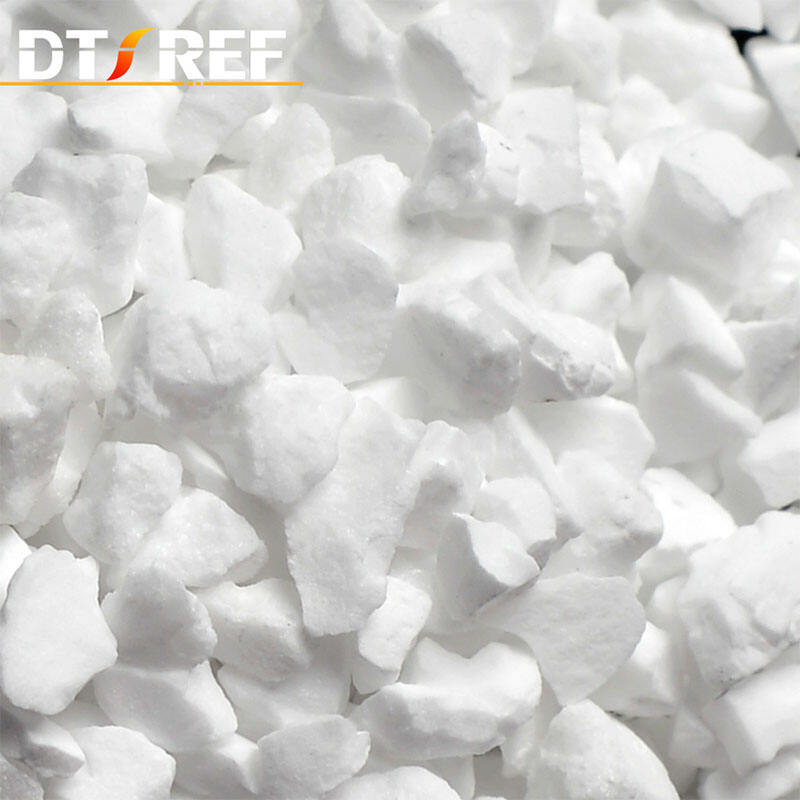
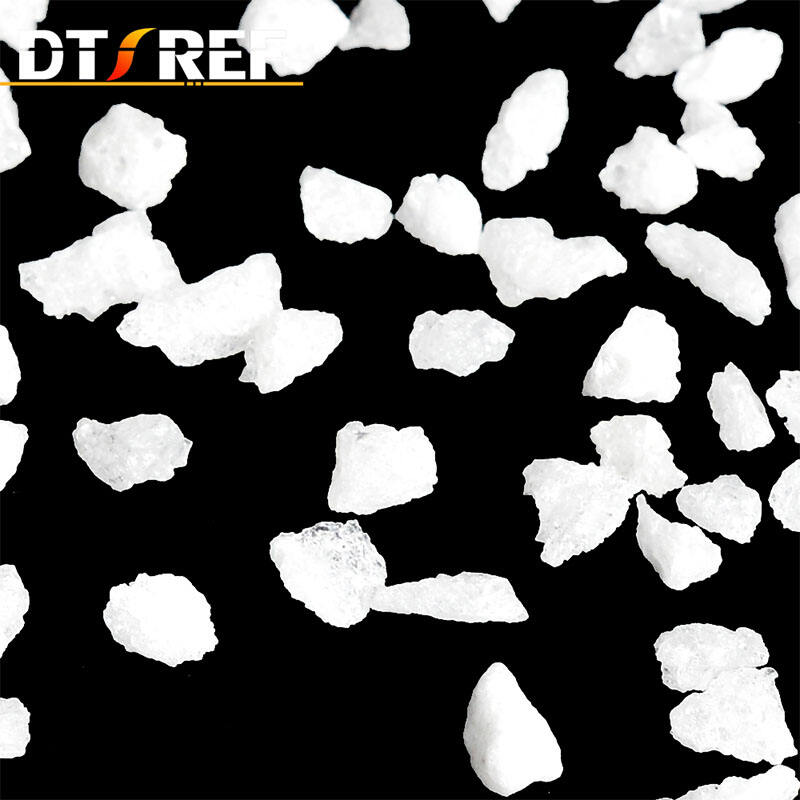
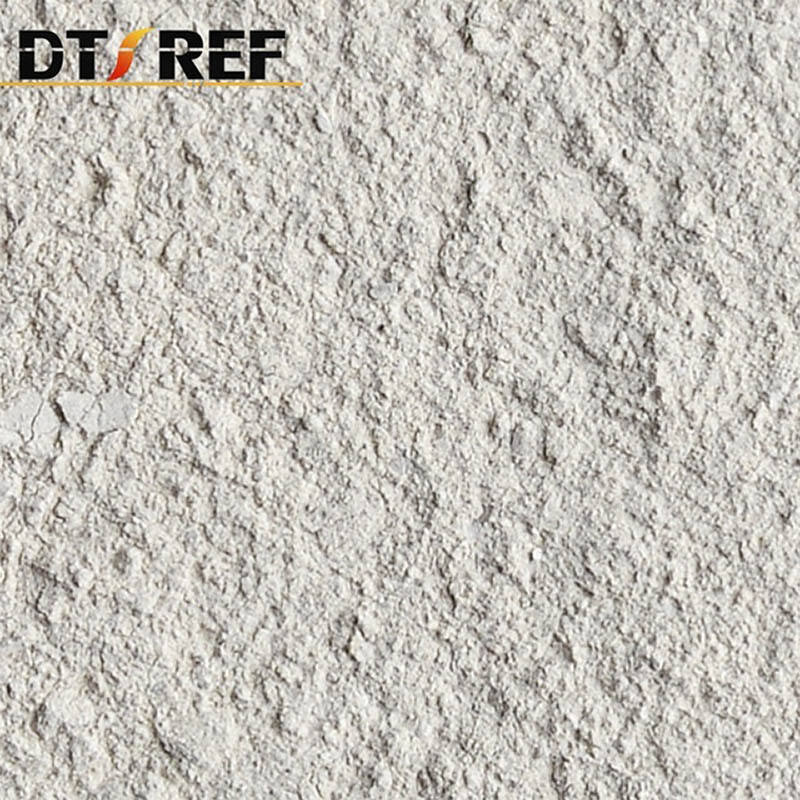
Fused mullite is an exclusive material that finds its applications in industries where very high temperatures are a concern. As a consequence, it can be located in heated locations such as furnaces or kilns. Fused mullite offers all of these benefits, which is why it features in an array of applications. In this post, we will discuss everything you should know about fused mullite - from what it is to how its made, where to use them and why a better alternative often do not exist.
The main ingredients of fused mullite include alumina and silica. All these raw materials are melted together, to produce a fused mullite. This melting results in a final product that is extremely hard, dense and able to withstand rapid temperature changes. Fused mullite is unique in that it can also resist considerable heat up to very high temperatures, making its use possible almost anywhere but the hottest spots. The strength in resistance to breaking or cracking due sudden fluctuations of temperatures are from the combination of Alumina and Silica which produces Fused Mullite.
Production of Fused Mullite requires certain steps - Before workers manufacture the products, raw materials - bauxite and kaolin in this case- are to be collected first. These are: materials that contain the necessary alumina and silica for fused mullite formation. They then crush the gathered materials into small bits, pieces them together in correct ratios. The correct mixing of the components is essential to guarantee that the properties are present in case we want them. Coils are then placed in a furnace and heated to about 2000 degrees Celsius. The materials melt and bond together into fused mullite at this extreme heat. After that, the fusion mullite is cooled down to room temperature. The mixture is then poured into the mold or form in which it will be used as intended. A lot of temperature and materials control must be monitored to create quality content through this whole process.
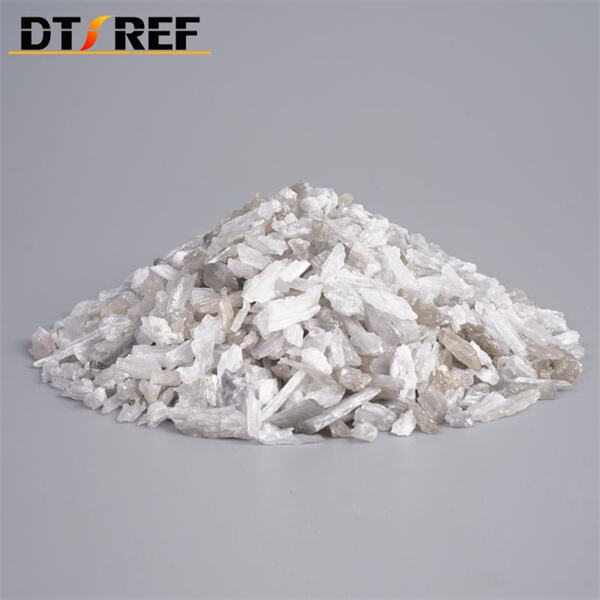
Fused mullite can be commonly seen in various high-temperature industrial applications. This includes steel making, metal casting, glass manufacturing and ceramics production. Fused mullite because it maintains its strength at high temperatures and resists rapid temperature changes making it ideal for use in furnaces,kilns,etc. In addition, the fused mullite reforming is a refractory material. That is that it reinforced against burnout and durable in both wear resistance, as well as chemical reactions. With these qualities, it is ideal for lining furnaces and other high temperature equipment where more rapidly wearing out or breaking materials might overheat.
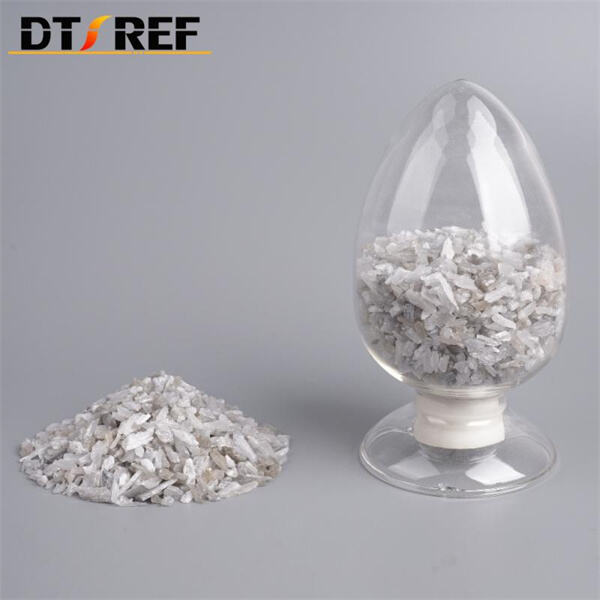
Fused Mullite vs. Traditional Materials There are several key benefits to using fused mullites instead of traditional materials in high-temperature applications: Some of its biggest selling points are that it is resistant to cracks during freeze and thaw cycles. It is more important in environments where temperature can change quickly. Fused mullite also has higher melt-till temperatures than many firebricks. Its high melting point is what makes tungsten safe to operate in extreme heats and not deteriorate or weaken. Fused mullite is also resistant to chemical attack and wear. This is what makes it perfect for harsh environments, where other materials will fail much faster.
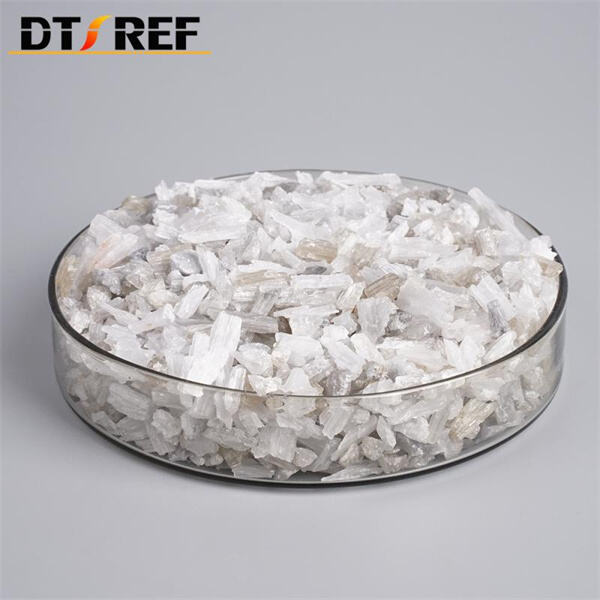
The demand for high-temperature materials is likely to grow as the world evolves and these are examples of some opportunities. Fused mullite is also one of the many materials used in industries all over that can withstand extreme conditions. Take the ceramics industry for example; there is a lot of growth projected in that sector over the next few years (which would create opportunities to produce fused mullite). With other businesses, industries turning it as the best choice for their high-temperature requirements we can anticipate to get some unusual applications of them such which would also increase its demand. In essence, fused mullite is a very valuable material that will have high impact on the ceramic market and other applications at higher temperatures in near future.
Datong has a budget of 10 million yuan. It has built fused mullite, micro powder testing laboratory as well as a room for scanning electron microscopy lab, application laboratory, high-temperature laboratory, and pilot base, with more than 40 sets of various instruments for testing, such as SEM Energy spectrometer, XRF, XRD particle size analyzer as well as many other world-class analysis and testing equipments. The technical center is home to more than 10 technical personnel which includes a senior engineer and two engineers, and maintains an ongoing relationship with Wuhan University of Science and Technology Sinosteel Luoyang Institute of refractories research University of Science and Technology Liaoning, Zhengzhou University and other researchinstitutes in the field of and refractory.
Datong is a leading national corporation that has been able to pass the ls0900l certificate for quality system, the is014001 certification for the environmental management system and OHSAS1800 certification for occupational safety and health. It was listed on 7 April 2016 under the stock code 836236. Nowadays, it has become the most comprehensive and largest high-quality aluminum based refractory raw base. Each tank is scrutinized with fused mullite, radiography test, etc. The most sophisticated production machine in the world, strict quality control on every step of production. Each and every detail is worthy of our close attention, and every single action is an integral element of our workforce.
We provide high-grade raw materials, a variety of valuable products, and fused mullite, while growing together with our clients. While at the same time. Datong Company wants to create a win-win partnership with all its partners, enabling it to serve its customers better and supply them with top quality products.
Kaifeng Datong Refractories Co., Ltd was created in the year 2008 and is a high-tech fused mullite private enterprise in Henan Province, that is specialized in the production, development and sales of high-quality Refractory raw materials as well as related products. After years of development that has never stopped the company now has an annual output of 30.000 tons of high temperature alumina powder 20.000 tons of magnesium aluminum spinel (electric melting melting and sintering) 10, 000 tons of calcium aluminate cement, 50, 000 tons of white fused alumina tabular alumina, 8, 000 tons of non-crystalline calcium Aluminate, thirty-three tons of high aluminum cement, and 50, 000 tons of different products that can be castable and shaped.
Copyright © Kaifeng Datong Refractories Co.,Ltd All Rights Reserved. - Privacy Policy- Blog
 EN
EN
 AR
AR HR
HR CS
CS DA
DA NL
NL FR
FR DE
DE EL
EL HI
HI IT
IT JA
JA KO
KO NO
NO PL
PL PT
PT RU
RU ES
ES SV
SV TL
TL ID
ID LT
LT SR
SR SK
SK UK
UK VI
VI HU
HU TH
TH TR
TR MS
MS GA
GA CY
CY AZ
AZ LO
LO LA
LA MN
MN NE
NE MY
MY KK
KK UZ
UZ